Edible Waste
Unusual Ingredients
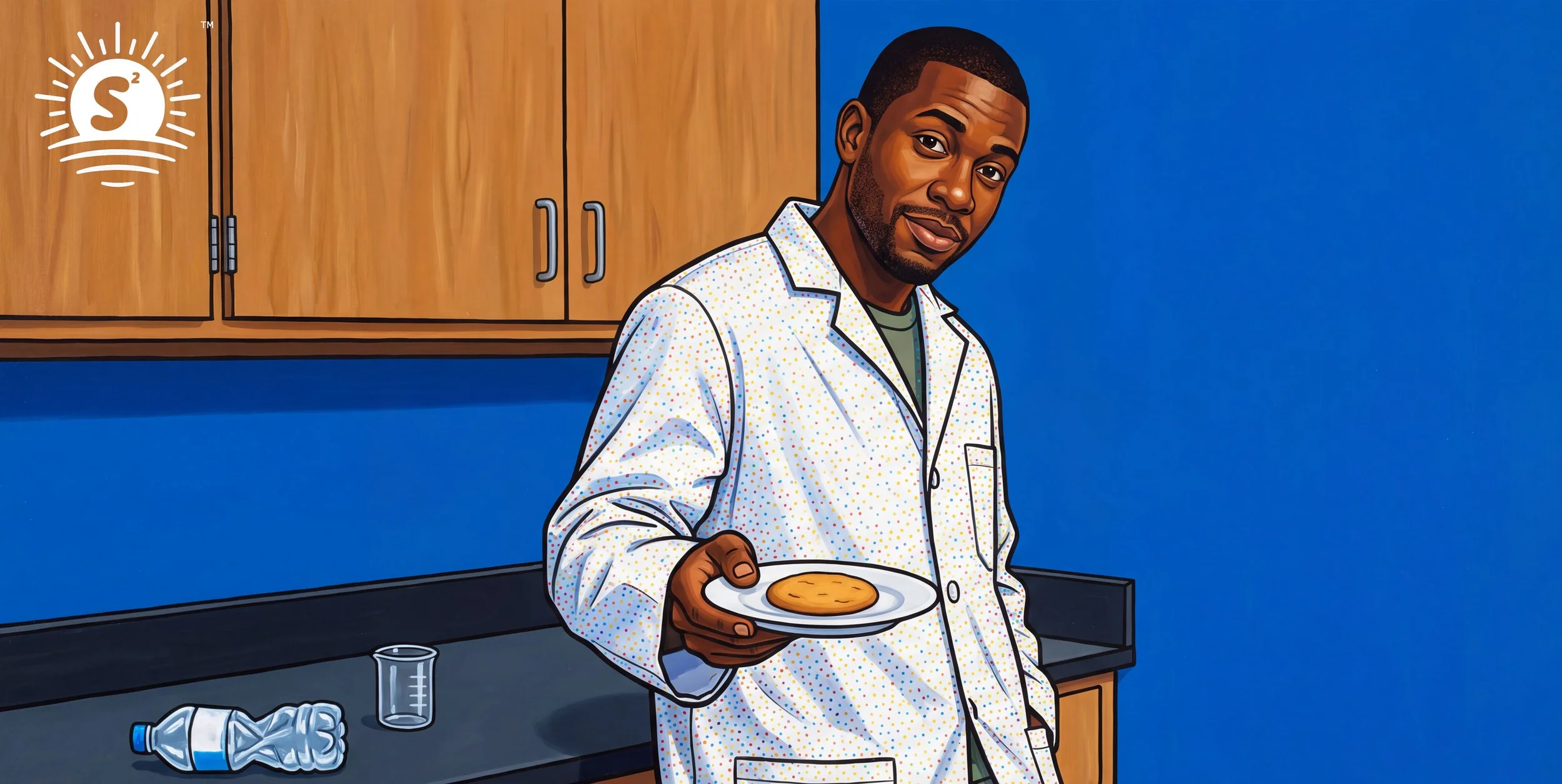
Everyone's heard the phrase "I'm so hungry I could eat [FILL IN THE BLANK WITH SOMETHING DISGUSTING]" — a horse, my hand, roadkill — but no one who says it really means it. It's just an idiom that a group of scientists recently put to the test.
Researchers at Southern Illinois University Carbondale have developed protein-rich, vanilla-scented cookies from plastic waste. Known as µBites (pronounced microbites), these cookies are made from a 33-step process that turns polyethylene terephthalate (PET) plastic — think water bottles — into edible nutrients.
So now Poland Spring can quench your thirst and satisfy your hunger.
The process starts with grinding PET and agricultural waste into a thick paste, which gets cooked with water and oxygen under high pressure and heat. The liquid mixture that comes out is then fed to multiple strains of yeast — one to create vanillin for flavoring and another to create beta-carotene for the golden color. Finally, the scientists add fiber and starch, use a 3D-printer to shape the cookies, put them in a microwave and voila — out comes "cookies."
So basically, a bunch of microorganisms eat a lot of plastic and trash, then produce µBites that are deemed safe and smell good, and we're supposed to eat 'em? Yeah, that's a macro NO for me!
But I'm not alone, and the scientists know it. While the technology has practical uses, possibly providing food in places like deserts, the Arctic, Antarctica, submarines and disaster relief vehicles, µBites aren't ready for prime time. They cost $60/kg, take two days to make and still need regulatory clearance for human consumption. Not to mention, they're gonna need a memorable marketing campaign to convince people who have choices to accept waste-driven food as an alternative.
Maybe they should call Mikey. He'll eat anything.
Still Processing
You might gag at the idea of eating plastic garbage, but imagine being stationed in Antarctica in February with the resupply plane grounded. µBites start looking like dinner.
That's not a knock on anybody. It's just how a yes works. You don't decide something in general — you decide it in a situation, with the options you've got in front of you at the time. And the answer you land on is usually right.
The trouble begins when the answer outlasts the situation.
The year the company skipped raises, everybody understood. Revenue was down and the alternative was layoffs, so nobody argued. But the number your next raise gets based on — and the one after that — was set during the down year.
A colleague leaves halfway through a reorg and you pick up a second team. Everyone in that meeting said it was temporary. They meant it. That was eighteen months ago and now it's on the org chart.
All approvals get routed through one person because that made sense when there were only four people. But now there are forty. You can walk the floor and see the shortage is over — but the process hasn't changed.
Scarcity announces itself — there's a meeting, an email, a reason.
Recovery doesn't.
No one calls everyone together to say the freeze is lifted, the transition is complete, we're not a startup anymore. The condition showed up with an expiration date attached but no one holding the calendar, so the yes just keeps standing.
No one goes back to it, because doing so looks like taking something back. You already agreed.
Silently agreeing again is easier than explaining why the terms you accepted no longer describe where you are.
Question of the Week
What are you still doing because of a condition that's over?
Are you subscribed?
If you enjoyed this article and want more weird stories that make corporate life make sense, Sunday Setup lands in your inbox every Sunday at 3:30 PM ET.
Click the button below to get a weekly dose of humor and mindfulness to help beat the Sunday Scaries.
