Cops & Froggers
The Frog & the Machine
No one likes every part of their job. Whether you're a VP, an intern — or somewhere in between — you probably have responsibilities that keep the machine running but never make the highlight reel.
Cleaning up version chaos in the shared drive
Updating dashboards leadership never logs into
Chasing people for feedback and approvals
That kind of thankless compliance theatre is exhausting, so we look for ways to lighten the load. But sometimes that makes matters worse.
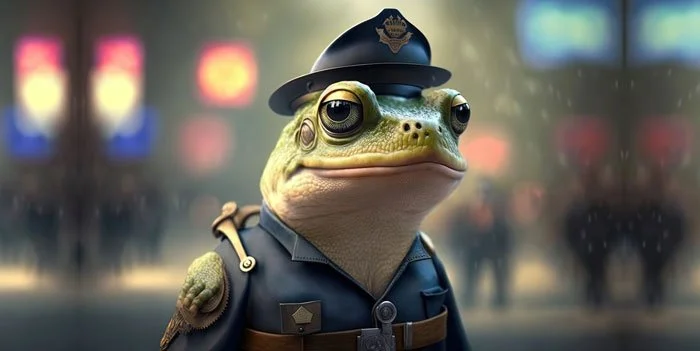
An attempt to streamline paperwork by a police department in Utah backfired when an AI-generated police report claimed an officer transformed into a frog during a routine traffic stop. Apparently the body cam recording captured audio from Disney's The Princess and the Frog — which was playing in the background — and HAL rewrote Law & Order as a fairytale.
"I'm sorry, Dave, but I need your license and registration...and a kiss."
Even with the mistakes, the police sergeant says the software could save officers six to eight hours per week. But that’s really a zero-sum savings. They’ll just trade time writing reports for time proofreading Claude’s hallucinations.
Next thing you know, a noise complaint becomes “a battle between neighboring kingdoms,” a broken taillight becomes “a cursed lantern of destiny,” and a speeding ticket turns into a dragon sighting.
If this keeps up, IA may end up investigating AI.
Hopefully they'll all live happily ever after.
The Story Problem
As funny as this amphibious officer story is, the real problem isn’t that the AI got the facts wrong. It’s that it got the story wrong.
And this can be dangerous when it happens in the workplace because the story shapes the outcome.
Take performance reviews.
Two people miss the same deadline.
One story becomes: “They struggled because the scope kept changing.”
Another becomes: “They couldn’t handle the workload.”
Same outcome.
Different explanation.
Different future.
Or incident reports.
A system goes down for twenty minutes.
The write-up can say: “We identified a gap in the process.”
Or: “An engineer failed to follow protocol.”
One story leads to fixing a process.
The other leads to fixing a person.
And then there’s earnings season.
Revenue comes in below projections — or even above them.
Leadership can say: “We’re tightening costs to stay competitive.”
Or: “We’re making difficult decisions to ensure long-term stability.”
Sometimes those words land after bonuses.
Sometimes they land before layoffs.
Same numbers.
Different meaning.
One story justifies cuts.
Another justifies compensation.
And the people in the middle are left trying to reconcile both.
At work, stories matter more than data.
Data records events.
Stories decide what they mean.
And meaning is what moves careers, budgets, and lives.
When AI tools start writing summaries, reports, and evaluations, they aren’t just formatting information. They’re shaping interpretation. They’re stepping into a role humans used to own: the storyteller.
Which means the risk isn’t bad math. It’s bad meaning.
Because once a story hardens into a sentence — in a report, in a review, in a recap — it stops being neutral. It becomes memory. And memory becomes judgment.
Maybe the lesson isn’t about trusting AI. It’s about noticing how easily meaning gets assigned once someone — or something — puts words around an event.
Not everything that gets written down is what actually happened. Sometimes it’s just the version that arrived first.
And once a narrative takes hold, it doesn’t just explain the past — it quietly justifies what comes next.
Promotions.
Cuts.
Credit.
Blame.
All of it begins as a sentence somewhere.
Which is why it’s worth paying attention to the story your work is quietly telling — before someone else gets to decide what it means.
Question of the Week
How are you shaping the story about your work?
A) Through my outputs
B) Through how I comunicate
C) I’m not really shaping it
D) I don’t know…and that’s scary
Are you subscribed?
If you enjoyed this article and want more weird stories that make corporate life make sense, Sunday Setup lands in your inbox every Sunday at 3:30 PM ET.
Click the button below to get a weekly dose of humor and mindfulness to help beat the Sunday Scaries.
