Photo Bomb
Paper Faces
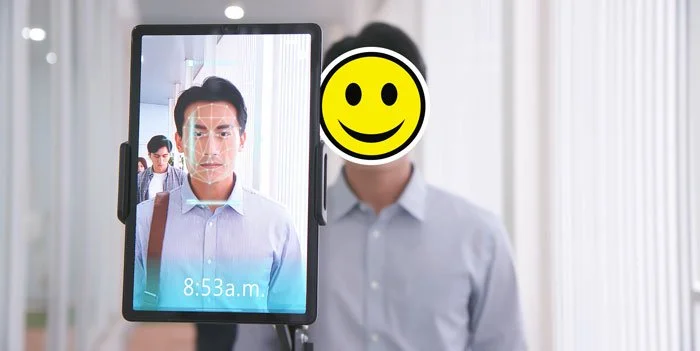
No matter where you work, chances are you have to clear a few security hurdles to access certain systems and buildings. Corporate security measures are as ubiquitous as oxygen because — again — bad actors. To keep them at bay we use rotating passwords, two-factor authentication, and ID badges, but some people still find creative ways around them...until they get busted.
A group of Chinese employees got caught trying to bypass facial recognition scanners with printed face masks. To check in for work, the public servants were required to use a facial-scanning time clock. But if they wanted credit for a day they didn’t actually work, they simply handed a photo of their face to a coworker and asked them to "clock in" for them.
And that worked — until a whistleblower sent surveillance footage up the flagpole.
There's always one!
In theory, the idea is genius. In reality, trying to fool facial recognition software with a paper face is like trying to rob a bank by holding up a photo of a gun.
And yet, these 2-D doppelgängers managed to confuse AI with what amounts to a Rorschach test of human faces. We’re in a global AI arms race, and the winning weapon is a step above a Commodore 64 hooked up to a dot-matrix printer.
So much for computers taking over the world.
If world-class facial recognition can be defeated by whatever was left in the printer tray, maybe the robots aren’t coming for our jobs just yet.
We can all take the blue pill and go back to sleep.
Performance as Compliance
Last year in TP Facetime, I wrote about public restrooms in China that made people watch ads just to get toilet paper, turning a basic human need into a performance. It was funny and ridiculous — like the three seashells in Demolition Man — but the takeaway was serious: surveillance erodes trust.
And no one likes working under the watchful eye of keystroke trackers and green-dot monitors.
The story above shows the next evolution of that same instinct.
The employees weren’t trying to do better work. They were trying to look like they were working.
Performance as Compliance. Box checked.
When systems reward appearance over impact, people adapt.
People change what they do when what gets rewarded isn’t what actually matters.
If you measure the signal rather than the substance, you’ll get:
perfect attendance instead of meaningful output
green dots instead of good decisions
compliance instead of commitment
motion instead of progress
We’ve all seen versions of this at work:
The meeting that exists solely so someone can say, “We met.”
The report that gets produced because it’s due — not because it’s useful.
The employee who stays visibly late so effort can be observed, even when the real work was finished hours ago.
None of this means people are lazy. It means they’re responsive.
And the danger isn’t just inefficiency. It’s what this kind of environment teaches over time:
Looking busy is safer than being honest.
Visibility beats value.
Compliance is more important than clarity.
The real test isn’t whether people can follow the system. It’s whether the system rewards the right thing.
If your work environment rewards appearances, don’t be surprised when people start performing instead of producing.
Question of the Week
What does your workplace reward the most?
A) Visible activity
B) Actual results
C) A mix of both
D) I honestly don’t know
Are you subscribed?
If you enjoyed this article and want more weird stories that make corporate life make sense, Sunday Setup lands in your inbox every Sunday at 3:30 PM ET.
Click the button below to get a weekly dose of humor and mindfulness to help beat the Sunday Scaries.
